
 Image 1 of 1
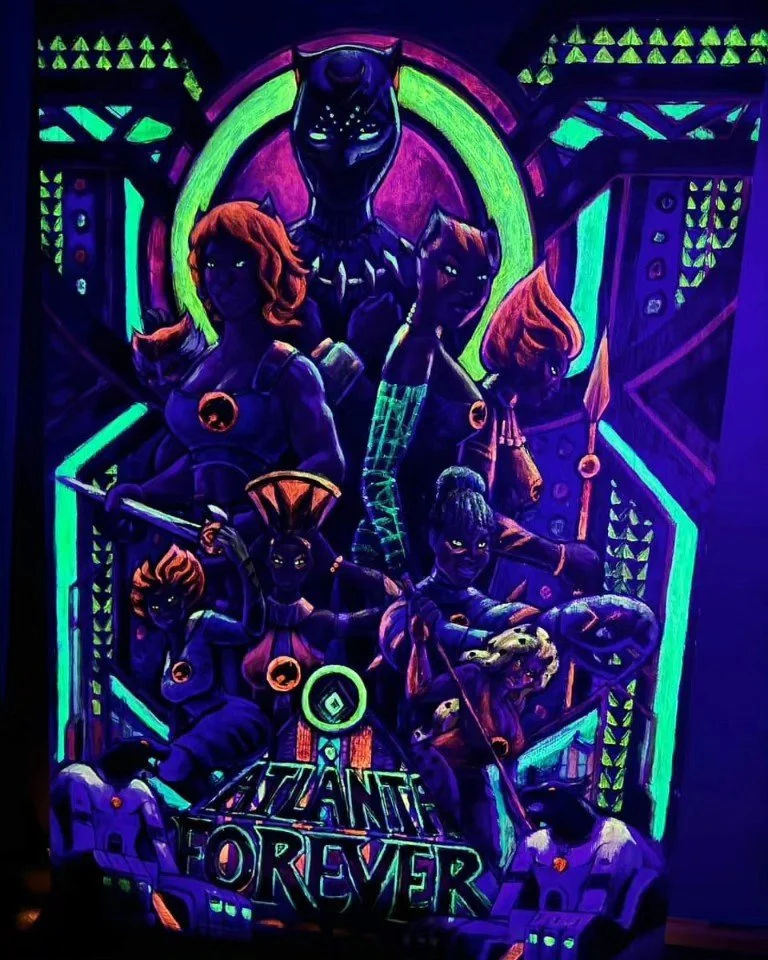
This gothic Neon painting is a luminous fusion of traditional paintwork and electric glow, where color, light, and surface interact to create a piece that reads differently by day and by night.
Visual appearance
Core elements: a painted composition—often acrylic, oil, or enamel—on a rigid support (canvas, wood panel, or metal), integrated with sculptural neon tubing or LED neon-flex. The neon can trace outlines, form independent shapes, or sit as a layered plane in front of the painted surface.
Light and color dynamics: neon emits a saturated, directional light that refracts across pigments, varnishes, and textures. Warm neon (amber, pink) produces soft, enveloping glows and warms surrounding pigments; cool neon (electric blue, cyan, green) skews color perception, making adjacent hues read more vivid or muted depending on contrast. Translucent glazes and iridescent mediums shift appearance as light intensity and viewing angle change.
Contrast and depth: the bright, often high-chroma neon contrasts sharply with matte or low-sheen paint, creating foreground/backlight relationships. Neon acts like a movable value and chroma source: it can flatten space when backlighting a silhouette, or carve depth by rim-lighting forms and casting colored shadows on textured impasto.
This gothic Neon painting is a luminous fusion of traditional paintwork and electric glow, where color, light, and surface interact to create a piece that reads differently by day and by night.
Visual appearance
Core elements: a painted composition—often acrylic, oil, or enamel—on a rigid support (canvas, wood panel, or metal), integrated with sculptural neon tubing or LED neon-flex. The neon can trace outlines, form independent shapes, or sit as a layered plane in front of the painted surface.
Light and color dynamics: neon emits a saturated, directional light that refracts across pigments, varnishes, and textures. Warm neon (amber, pink) produces soft, enveloping glows and warms surrounding pigments; cool neon (electric blue, cyan, green) skews color perception, making adjacent hues read more vivid or muted depending on contrast. Translucent glazes and iridescent mediums shift appearance as light intensity and viewing angle change.
Contrast and depth: the bright, often high-chroma neon contrasts sharply with matte or low-sheen paint, creating foreground/backlight relationships. Neon acts like a movable value and chroma source: it can flatten space when backlighting a silhouette, or carve depth by rim-lighting forms and casting colored shadows on textured impasto.